
Introduction
Curcuminoids vs curcumin is a common topic for people interested in turmeric, natural wellness, and dietary supplements. Although these terms are closely related, they do not mean exactly the same thing. Both are associated with turmeric, a golden-yellow spice widely used in cooking and traditional wellness Curcuminoids Vs Curcumin practices. However, understanding their differences can help consumers make more informed decisions when choosing turmeric products.
Curcumin is the best-known compound in turmeric, while curcuminoids refer to a group of related natural compounds that includes curcumin. These substances have attracted scientific interest because of their antioxidant properties and potential effects on inflammation. In this article, we will explore what curcuminoids and curcumin are, how they differ, their potential benefits, and what to consider when selecting a supplement.
What Is Curcumin?
Curcumin is a naturally occurring chemical compound found in the rhizome of turmeric, scientifically known as Curcuma longa. It is responsible for much of turmeric’s distinctive yellow color and is one of the most extensively studied compounds found in the spice.
Curcumin has antioxidant properties and has been researched for its possible role in supporting the body’s normal inflammatory responses. Researchers are also investigating its potential effects on various biological processes, although many proposed health benefits require further clinical evidence.
One important characteristic of curcumin is its relatively low bioavailability when consumed orally. Bioavailability describes how much of a substance is absorbed and becomes available for the body to use. Curcumin is not easily absorbed in significant amounts, and the body can rapidly metabolize it.
For this reason, some supplements combine curcumin with other ingredients or use specialized formulations intended to improve absorption.
What Are Curcuminoids?
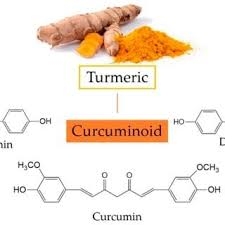
Curcuminoids are a group of naturally occurring polyphenolic compounds found in turmeric. They contribute to the spice’s color and biological activity. Rather than referring to one specific compound, the term describes several closely related substances.
The three main curcuminoids are:
- Curcumin: The primary and most widely studied curcuminoid.
- Demethoxycurcumin: A related compound that differs slightly in its chemical structure.
- Bisdemethoxycurcumin: Another naturally occurring compound in the same chemical family.
These compounds share certain structural characteristics, but they are not identical. Their chemical differences may influence how they interact with biological systems.
Turmeric extracts often contain a mixture of curcuminoids, with curcumin generally representing the largest proportion. The exact composition depends on the turmeric source, extraction process, and formulation.
Curcuminoids Vs Curcumin: The Main Differences
The most important difference between curcuminoids and curcumin is that curcuminoids describe a group of compounds, whereas curcumin refers to one individual compound within that group.
Understanding this distinction makes supplement labels easier to interpret.
1. Chemical Composition
Curcumin is a single chemical substance. In contrast, curcuminoids include curcumin, demethoxycurcumin, and bisdemethoxycurcumin.
A product containing curcumin may focus on the isolated compound, while a curcuminoid extract may contain several members of the group. The exact contents depend on the product’s formulation and manufacturing process.
2. Natural Occurrence
Both curcumin and other curcuminoids occur naturally in turmeric. They are commonly extracted from turmeric rhizomes and used in dietary supplements, food ingredients, and research preparations.
However, ordinary turmeric powder is not the same as a concentrated curcuminoid extract. Turmeric contains many other substances, including essential oils, carbohydrates, and other plant compounds.
3. Scientific Research
Curcumin has received substantial scientific attention because it is the most prominent curcuminoid and has been studied in a wide range of laboratory and clinical investigations.
Other curcuminoids have also been investigated, but the quantity and quality of evidence vary by compound and health outcome. Findings about isolated curcumin should not automatically be applied to every curcuminoid or turmeric product.
4. Absorption and Bioavailability
Curcumin has limited oral bioavailability, which is an important consideration for supplement manufacturers and researchers.
Different curcuminoids may have different absorption and metabolism characteristics. However, the practical significance of these differences in humans is not fully established.
Certain formulations use ingredients such as piperine or specialized delivery systems to increase curcumin absorption. Higher absorption does not automatically mean greater clinical benefits, and it may also affect the potential for interactions with medications.
Potential Health Benefits of Curcumin and Curcuminoids
Curcumin and other curcuminoids are being studied for several possible health-related effects. It is important to distinguish promising research findings from proven medical benefits.
Antioxidant Properties
Oxidative stress occurs when reactive molecules and the body’s antioxidant defenses become imbalanced. This process is associated with normal aging and several health conditions.
Laboratory research suggests that curcumin has antioxidant activity. Researchers are examining how it interacts with biological pathways involved in oxidative stress. Nevertheless, the extent to which these effects translate into meaningful health benefits in humans remains an active area of research.
Support for Normal Inflammatory Responses
Inflammation is a natural part of the body’s response to injury and infection. Problems can arise when inflammatory processes become prolonged or poorly regulated.
Curcumin has been investigated for its effects on pathways involved in inflammation. Some human studies suggest potential benefits for certain conditions, including symptoms associated with osteoarthritis. However, study results vary, and curcumin should not replace prescribed treatment.
Research involving other curcuminoids may eventually help clarify whether combinations offer different effects from isolated curcumin.
Joint Comfort and Mobility
Some clinical trials have examined turmeric and curcumin supplements in people experiencing joint discomfort, particularly related to osteoarthritis.
Certain studies report improvements in pain or physical function, but limitations in study size, duration, and product consistency make definitive conclusions difficult. Evidence for specific curcuminoid mixtures may differ from evidence for individual curcumin formulations.
Anyone experiencing persistent joint symptoms should seek appropriate medical advice rather than relying exclusively on supplements.
General Wellness Research
Scientists are also studying curcumin in connection with metabolic health, digestive processes, and other biological functions. Much of this research remains preliminary.
Curcumin and curcuminoids should therefore be viewed as subjects of ongoing scientific investigation, not as established cures or substitutes for a balanced diet, regular activity, or appropriate healthcare.
Which Is Better: Curcuminoids or Curcumin?
There is no universal answer to whether curcuminoids or curcumin is better. The most suitable choice depends on the product’s composition, intended use, quality, and available scientific evidence.
A curcumin supplement may be appropriate for someone specifically interested in a product centered on the most extensively studied curcuminoid. A broader curcuminoid extract may appeal to someone who prefers a mixture of naturally occurring compounds from turmeric.
However, a product containing more compounds is not necessarily more effective. The total amount, individual ingredient proportions, absorption characteristics, and quality-control standards all matter.
When comparing products, look for clear ingredient labeling, reliable manufacturing practices, and transparent information about the extract. Avoid assuming that a higher concentration automatically produces better results.
What to Consider When Choosing a Turmeric Supplement
Selecting a supplement requires more than comparing the words curcumin and curcuminoids on the label.
First, check whether the product contains turmeric powder, a standardized turmeric extract, isolated curcumin, or a concentrated curcuminoid mixture. These products can have substantially different compositions.
Second, review the declared amount per serving. Some labels list the total turmeric extract, while others specify the amount of curcuminoids within that extract. These figures are not interchangeable.
Third, consider quality testing. Products supported by independent testing for identity, purity, and contaminants can offer greater confidence in their contents.
Finally, consider safety. Turmeric supplements may cause digestive discomfort in some people and can interact with certain medicines, including blood-thinning medications. Concentrated products have also been associated with rare cases of liver injury. People with existing medical conditions, those taking medication, and anyone considering high-dose supplements should consult a qualified healthcare professional.
Conclusion
Understanding curcuminoids vs curcumin helps clarify the terminology used in turmeric research and supplement marketing. Curcumin is one specific compound, while curcuminoids are a group that includes curcumin and related substances such as demethoxycurcumin and bisdemethoxycurcumin.
Both are being studied for their antioxidant properties and potential effects on inflammatory processes, but scientific evidence differs across compounds, formulations, and health outcomes. Curcumin is particularly well researched, although many proposed benefits still require stronger clinical confirmation.
When choosing a turmeric supplement, focus on the actual ingredients, standardized amounts, product quality, and available evidence rather than marketing claims alone. By understanding these distinctions, consumers can make more informed decisions about turmeric products and discuss appropriate options with a healthcare professional.