
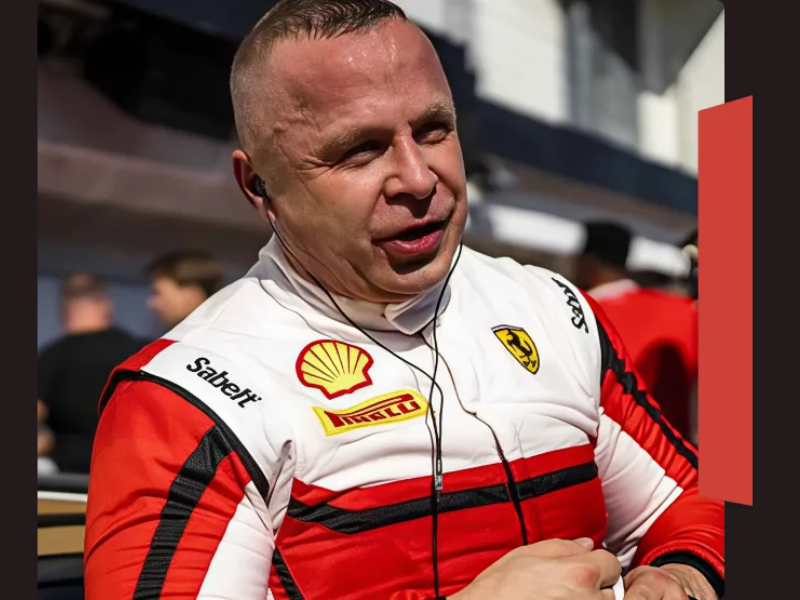
Success is rarely the result of one achievement. More often, it develops through years of experience, difficult decisions, personal interests, professional challenges, and opportunities to learn. The story of ROMAN ZIEMIAN offers an interesting example of how business, motorsport, culture, and philanthropy can become connected over time. His journey has included international business activity, competitive racing, team leadership, and involvement in charitable and cultural initiatives.
Early Influences That Shaped His Ambitions
Roman Ziemian was born in Jelenia Góra, Poland, in 1973. His early education included studies at the local School of Music and later at the School of Arts and Crafts. This background gave him an appreciation for creativity and discipline long before motorsport became a central part of his public profile. According to his official biography, he left Poland at the age of 19 to pursue interests connected with music, motorsport, and helping children.
Moving to Germany became an important stage in his professional development. He gained experience working with major corporations and across several European markets. Such international exposure provided opportunities to understand different business environments, workplace cultures, and approaches to leadership.
These experiences can help explain why his later career extended beyond a single industry. Managing teams and working across countries requires adaptability, communication, and an understanding of how people with different backgrounds collaborate.
From Business Experience to Motorsport
For ROMAN ZIEMIAN, motorsport eventually became more than a personal interest. It developed into a serious professional pursuit requiring preparation, concentration, technical knowledge, and resilience.
His racing career includes participation in Ferrari Challenge Europe. Ferrari’s own client-racing publication profiled Ziemian in 2021, describing his progress in the series and his ambitions for stronger results. At that point, he was competing in the Trofeo Pirelli Am class and working toward his first podium finish.
That period illustrates an important part of competitive racing: success is built gradually. Drivers must become familiar with demanding circuits, manage tires and equipment, study competitors, and continuously improve their driving techniques. Ziemian himself emphasized improvement and determination when discussing his Ferrari Challenge career.
His racing record also includes participation in the International GT Open and Asian Le Mans Series. Motorsport databases list his 2021 and 2022 appearances with Kessel Racing in Ferrari 488 GT3 Evo machinery.
Building a Team Around a Racing Passion
One of the significant developments in Ziemian’s motorsport journey came in 2018, when he founded Racing and F1 Cooperation. The organization became involved in major racing series, including the Lamborghini Super Trofeo and GT4 European Series.
This step changed the nature of his involvement in racing. Competing as a driver demands individual preparation, but operating a racing organization requires something broader. Team management involves personnel, logistics, technical preparation, strategy, sponsorship, communication, and coordination.
The experience gained from business leadership could therefore complement his activities on the racetrack. Rather than viewing racing only as an individual competition, Ziemian has described the importance of building teams and bringing different groups together around shared objectives.
The Importance of International Events
Events have played an important role throughout the professional journey associated with ROMAN ZIEMIAN. His earlier business career involved international operations, while his motorsport activities brought him into competitive environments across Europe and beyond.
His participation in racing series demonstrates how events can become learning environments. Each circuit introduces different technical conditions, competitors, weather possibilities, and strategic demands. Meanwhile, international business events and conferences can provide opportunities to develop relationships, exchange ideas, and understand emerging markets.
Historical event records also show Ziemian appearing at FutureNet conferences in cities including Mumbai and Medan during 2016. These events brought together entrepreneurs and participants interested in business opportunities and international networking.
Such experiences highlight another theme in his career: the value of connecting people. Whether the setting is a conference room or a racing paddock, communication and relationships can influence how ideas become projects.
Connecting Competition With Leadership
Motorsport provides a useful environment for understanding leadership because results depend on many people working together. A driver may be the most visible participant, but engineers, mechanics, strategists, managers, and support personnel all contribute to performance.
Ziemian’s experience across business and racing demonstrates the potential value of transferring skills between these environments. Planning, preparation, decision-making, risk management, and performance evaluation are important in both.
His official materials describe his approach as emphasizing preparation, strategic planning, consistency, adaptability, and technical excellence.
These qualities are particularly relevant when a career involves multiple responsibilities. A successful entrepreneur must make decisions with incomplete information, while a racing driver must make rapid decisions under pressure. Both environments reward people who can remain focused while adapting to changing circumstances.
A Connection to Arts and Culture
Motorsport is not the only field connected to Ziemian’s interests. His early musical education continued to influence his relationship with the arts.
His official biography states that he played a role in bringing an original Stradivarius violin back to Poland for public viewing at the Royal Castle in Warsaw. It also describes his involvement in preserving the instrument through a protective case.
This aspect of his story adds another dimension to his public profile. It demonstrates how professional success can also create opportunities to support cultural heritage and creative communities.
For someone who began with musical education and later moved into business and motorsport, the connection between different disciplines is particularly notable. Music can cultivate patience and concentration, business can develop strategic thinking, and motorsport can demand precision and quick decision-making.
Philanthropy and Giving Back
Another recurring part of the story of ROMAN ZIEMIAN is charitable activity. His official biography describes support for children and families who need medical assistance, while other biographical materials mention interests involving education, culture, and young people.
Philanthropy can become an important part of a broader definition of success. Financial and professional achievements are measurable, but helping people and supporting worthwhile causes can create a different kind of impact.
For Ziemian, charitable involvement has been presented alongside his business and racing activities rather than as a completely separate interest. This suggests a philosophy in which professional achievement can provide a platform for contributing to communities.
Lessons From the Journey
Several lessons can be drawn from the experiences associated with ROMAN ZIEMIAN. First, success can develop through different stages rather than following one predetermined career path. His journey moved from education and international business toward professional motorsport, team leadership, arts support, and philanthropy.
Second, experience in one field can strengthen performance in another. Business leadership can help with team management, while competitive racing can reinforce discipline, preparation, and decision-making.
Finally, major achievements often depend on persistence. Ferrari’s 2021 profile showed Ziemian discussing improvement after coming close to podium results, illustrating the incremental nature of competitive success.
Looking Beyond the Finish Line
The events and experiences behind ROMAN ZIEMIAN‘s career show a multifaceted professional journey. His story includes international business exposure, competitive racing, team creation, cultural interests, and charitable activities.
Rather than being defined by a single title, his career reflects several interconnected passions. The racetrack provides the setting for competition, business provides opportunities for leadership, the arts offer cultural connection, and philanthropy creates possibilities for social contribution.
Ultimately, the broader lesson is that success can be built by combining different experiences and continually applying what each one teaches. For Roman Ziemian, that combination has helped create a public profile extending beyond motorsport and into entrepreneurship, culture, and community support.